
-
 +8613927492609
  sales@bzshow.net

Case
Hot Products
-
Premium Custom PU Leather Jewelry Boxes | Luxury Mirror Jewelry Packaging Set
Style: Luxury Jewelry Box Brand: Yadao Material: High-end leather + suede Color: Customized Dimensions: Customized MOQ: 500pcs Logo: Can be printed Sample: Available OEM / ODM: Offered Place of origin: Guangdong, China (mainland)
-
Premium Leather Jewelry Boxes | Personalized Jewelry Packaging Solutions
Style: Luxury Jewelry Box Brand: Yadao Material: High-end leather + suede Color: Customized Dimensions: Customized MOQ: 500pcs Logo: Can be printed Sample: Available OEM / ODM: Offered Place of origin: Guangdong, China (mainland)
-
Starry Treasure Microfiber Jewelry Box - Customizable Multi-Compartment Luxury Storage Case
Style: Velvet Jewelry Box Brand: Yadao Material: leather + soft velvet Color: Customized Dimensions: Customized MOQ: 500pcs Logo: Can be printed OEM / ODM: Offered Place of origin: Guangdong, China (mainland)
-
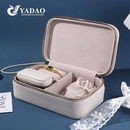
YADAO Multi-Functional Jewelry Case – Portable, Customizable, and Travel-Ready
Style: Velvet Jewelry Box Brand: Yadao Material: leather + soft velvet Color: Customized Dimensions: Customized MOQ: 500pcs Logo: Can be printed OEM / ODM: Offered Place of origin: Guangdong, China (mainland)
Latest News
New Multi-Layer Luxury Jewelry Packaging Elegance Meets Versatile Storage
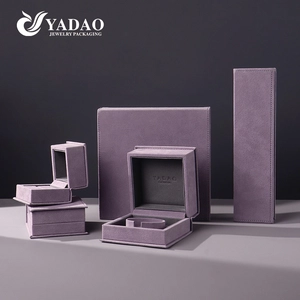
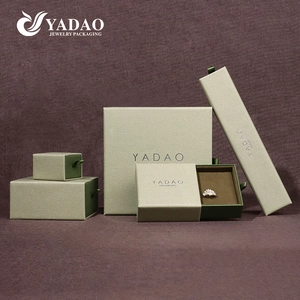
Customizable Multi-size Luxury Jewellery Presentation Packaging Boxes
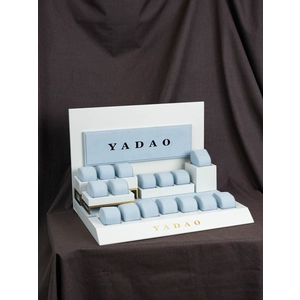
Custom Jewelry Display Stand – Premium Retail Showcase for Watches
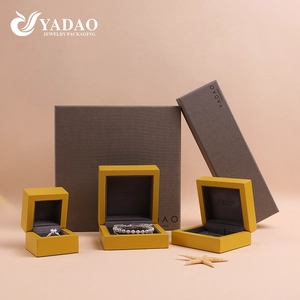
YADAO Premium Wood & Beaded Velvet Jewelry Boxes - Customizable Sizes & Colors
Elevate your jewelry presentation with the Love in the Afternoon Collection by YADAO. Crafted from premium natural wood and lined with soft, beaded velvet, these boxes combine lasting durability with a luxurious, tactile finish.
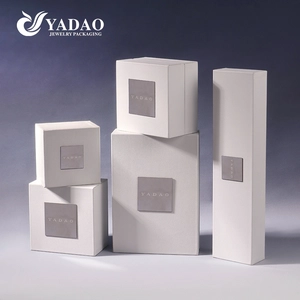
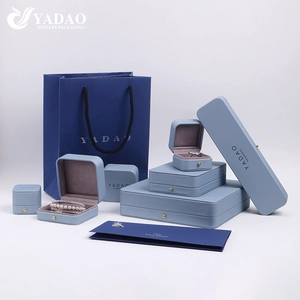
Dreamy Light‑Blue Velvet Jewelry Packaging Customizable Gift Boxes
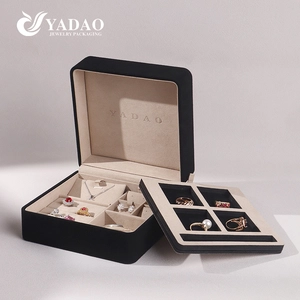
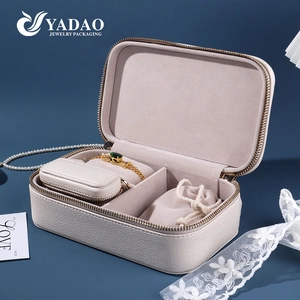
New Multi-Functional Jewelry Storage Boxes Merging Luxury and Practicality
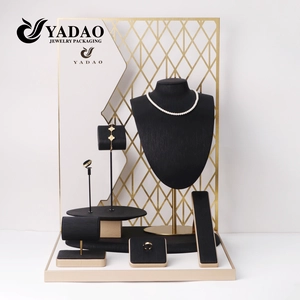
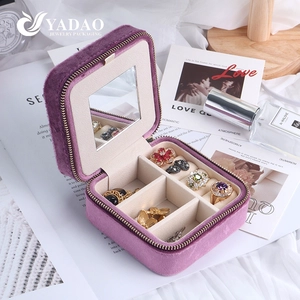
Pink Forest Customizable Travel Jewelry Case – Your Go-To Compact Organizer
Elevate Your Jewelry Storage: Introducing the Customizable Pink Forest Travel Jewelry Case from YADAO
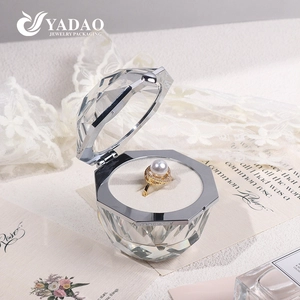
New Dream Crystal Ring Box Elegance Meets Versatile Customization in Jewelry Packaging
Dream Crystal Ring Box, a new collection designed to redefine how jewelry is presented, stored, and gifted.
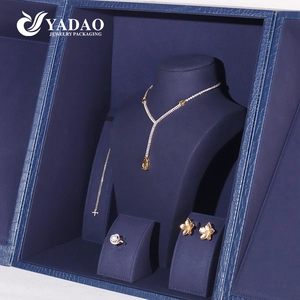
Stylish Double-door Jewelry Display Box Upgrades Brand Packaging
Elevate your jewelry packaging and display with our premium navy blue jewelry box.
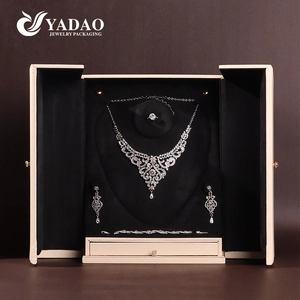
Luxury Double-Opening Jewelry Storage Box Premium Set Packaging with PU Leather & Velvet
Elevate Jewelry Gifting with the Dreamy Double-Opening Jewelry Box, Combining Elegance, Functionality & Brand Customization
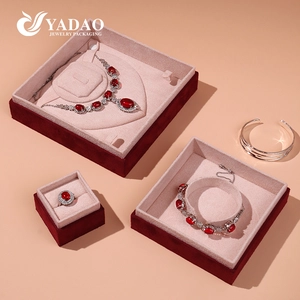
New Wine Red Luxury Ultra Fine Velvet Jewelry Box Collection
Velvet Jewelry Box Collection is a high-end luxury jewelry packaging series crafted from premium ultra fine velvet fabric.
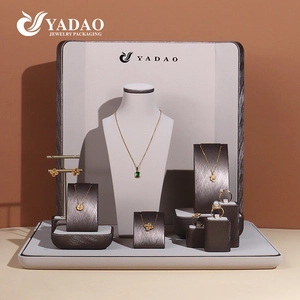
New Luxury Taupe Gray-Brown Jewelry Display Collection Elevate Your Jewelry Brand Image
Yadao launched brand-new taupe gray-brown textured leather jewelry display full set, bringing a more advanced and flexible display solution for global jewelry brands, boutiques and wholesalers.
Client Background
Brand: Morpho (pseudonym)
Founded: 4 years ago
Products: Designer silver & gold‑plated jewelry, known for geometric shapes and Morandi color palette
Avg. order value: $70–210 USD
**Sales channels**: Official website, select stores (15 in China + 3 in Japan)
**Annual revenue**: ~$4.5M USD
Packaging signature: Brand primary color is “misty blue” (PANTONE reference), used on boxes, shopping bags, ribbons, and thank‑you cards.
Morpho is a jewelry brand built on color and design. The founder, a London College of Art alumnus, has an almost obsessive attention to color accuracy. She often says: “Our brand language is color. If the color is wrong, the whole story is wrong.”
The Problem: Recurring Color Difference, Eroding Brand Trust
1. Three batches, three different colors
Morpho produced three batches of packaging (about 20,000 sets each) over two years, using two different suppliers. Results:
-
Batch 1: turned out gray‑green – far from the “misty blue” in their brand book. 12% of returns cited “color mismatch” as the reason.
-
Batch 2 (new supplier): purple‑blue – inconsistent with Batch 1. The founder rejected the sample on sight: “This is not our color.”
-
Batch 3 (before we got involved): The supplier made 6 sample rounds, each with noticeable color difference. Morpho reluctantly accepted a “close enough” version, but was deeply unhappy.
2. Long sampling cycles, missed sales windows
-
Each new packaging iteration required 4–5 rounds of back‑and‑forth (send sample → print → feedback → reprint), taking 6–8 weeks on average.
-
Because of color issues, Morpho missed an important Qixi Festival promotion (packaging couldn’t be delivered in time; they had to use old stock). Estimated lost sales: ~$110,000 USD.
-
Founder: “We’re not buying packaging – we’re playing a guessing game with suppliers.”
3. Online vs. offline experience gap
-
The “misty blue” shown on Morpho’s website and product pages was a professionally calibrated render. But the actual packaging customers received was grayish or purplish, leading to countless “expectation vs. reality” comparison posts on Xiaohongshu and Weibo.
-
One viral complaint post got over 20,000 likes with the title: “Is Morpho’s box designed by a colorblind person?”
-
Select stores also complained: different batches displayed side by side showed obvious color variation, hurting visual merchandising.
4. No internal color standard
Although Morpho had a PANTONE reference (e.g., PANTONE 16-3920), different materials (paper, flocked fabric, ribbon, foil) absorb and reflect ink differently. Suppliers often said “this is what it looks like on paper” or “flocking can’t achieve that shade.” Morpho had no objective way to accept or reject.
Our Solution: A Full‑Link Color Management System
We did not simply “do another sample.” Instead, we built a closed‑loop system from color standard definition → multi‑material matching → production tracking → incoming verification.
1. Color standard definition: Lab value + physical master plate
-
Worked with Morpho to select a physical master plate of “misty blue” (signed off by the founder) – made of high‑white coated paper with matte lamination.
-
Measured the master plate with a spectrophotometer to obtain Lab values (L=62.3, a=-3.8, b=-9.2) as the digital benchmark for all future production.
-
Set color tolerance: △E ≤ 1.5 (barely perceptible to the human eye). For premium lines, △E ≤ 1.0.
2. Multi‑material color matching database
We built a color mapping table for every material used in Morpho’s packaging:
|
Material |
Original issue |
Our solution |
Final △E |
|---|---|---|---|
|
Specialty paper (350g) |
High ink absorption, too dark |
Custom spot ink + white primer coat |
≤1.2 |
|
Flocked fabric insert |
Fibers scatter light, looks grey |
Sulfur‑free dye + 15% higher dye concentration |
≤1.4 |
|
Shopping bag (kraft paper + lamination) |
Natural brown tint of kraft paper |
White base coat first, then spot color |
≤1.3 |
|
Ribbon (satin) |
Hue shift during dyeing |
Co‑developed formula with dye mill, batch retention |
≤1.1 |
|
Hot stamping foil |
Gold base affects blue overlay |
Clear protective foil + local stamping |
≤1.0 |
Each data point was validated with at least 3 sample rounds and recorded in the Morpho Color Standard Manual.
3. Production color tracking: from sample to mass production
-
Sampling phase: Provide 5 color swatches from different positions (top, bottom, left, right, center), measure each with a spectrophotometer. Only proceed to mass production if all 5 points have △E ≤ 1.5.
-
Mass production:
-
Keep first‑piece, middle‑piece, and last‑piece samples for every batch; record Lab values.
-
Take one sample every 5,000 boxes and measure color difference. Stop and adjust immediately if tolerance is exceeded.
-
Use a standard light box (D65, simulating daylight) for visual inspection – avoid ambient light interference.
-
-
Batch traceability: Each batch gets a unique lot number, and the color difference report is archived for at least 3 years.
4. Cross‑material visual consistency optimization
Even if Lab values are close, different surface gloss and texture can make colors look different to the human eye. We optimized:
-
Outer box: matte lamination to reduce glare.
-
Flocked fabric: short pile, high density to minimize light scattering.
-
Ribbon: matte satin instead of shiny.
-
Before mass production, we took group photos (box + bag + ribbon together) under natural light and store lighting, and had the brand confirm visual harmony.
5. Training and handover
-
Provided Morpho’s purchasing and QC staff with a 2‑hour color management training – how to use a spectrophotometer, read color difference reports, and judge acceptable samples.
-
Gifted a portable colorimeter (approx. $300) for Morpho to conduct incoming inspections themselves.
-
Delivered the Morpho Color Standard Manual in both digital and printed formats, to be used as the acceptance reference for any future supplier.
Results: From “Color Anxiety” to “Color Confidence”
1. Color difference data: from visible to nearly zero
-
First mass production batch (20,000 sets) under the new system: all measured points △E ≤ 1.3, with 80% ≤ 1.0.
-
Three consecutive batches (60,000 sets) showed a color variation standard deviation of 0.21, far below the industry average (typically 0.8–1.2).
-
The founder’s reaction upon inspecting the first batch: “This is exactly the blue I wanted.”
2. Sampling cycle dramatically shortened
-
Previously: 4–5 rounds, 6–8 weeks. Now: average 2 rounds, 2–3 weeks.
-
Reason: With digital benchmarks and the material database, the first sample already hits △E≈2.0, and the second round fine‑tunes to within tolerance.
3. Lower return rates, higher social sharing
-
Return reason “packaging color doesn’t match photos” dropped from 12% to 0.8% .
-
Monthly user‑generated unboxing posts on Xiaohongshu (hashtag #MorphoUnboxing) increased from 80 to 240 – a 3x increase.
-
A well‑known fashion influencer said in her video: *“The box actually matches what I saw on screen – finally no more guessing.” The video got over 1.5 million views.
4. Consistent in‑store display, reorders increased
-
Three Japanese select stores reported: the new batch packaging matches the brand’s physical swatch book, improving display quality noticeably.
-
One store increased their order by 20% and actively recommended Morpho to other brands for its “professional color management.”
5. Internal efficiency gains
-
Morpho’s own QC staff can now complete color inspection on an incoming carton of packaging within 10 minutes using the portable colorimeter we provided.
-
Communication cost with suppliers dropped by about 70% – no more “a bit bluer” or “a bit grayer” debates; just share Lab deviation data and a photo of the master plate.
6. Client’s own words
The founder of Morpho:
“For designers, color difference is a nightmare. I used to take a deep breath every time I received packaging, praying it wouldn’t be too far off. Now I can sign off with my eyes closed – because I know your system is more reliable than my eyes.”
The purchasing head added:
“That Color Standard Manual you gave us is now attached to every packaging contract. Whoever the supplier is, they must follow this standard. We are no longer at the mercy of different suppliers’ interpretations.”